Profile
EAL/ELA educator based in Busan, South Korea since 2008, with 18 years of international teaching experience. Currently teaches Grades 2, 4, and 6 EAL and ELA at Dongsung Elementary School while co-leading Banhana English, a literacy and test-prep academy since 2016. Uses evidence-informed approaches, including retrieval practice, spaced repetition, cognitive load management, and Kagan Cooperative Learning, to structure instruction and classroom culture. Designs the instructional frameworks behind custom curriculum, assessment, and classroom-management tools. Holds a Washington DC K-6 teaching license and an M.Ed. in TESOL; pursuing a Secondary Mathematics endorsement.
Professional Experience
English Teacher, Dongsung Elementary School, Busan
April 2026 to present
- Teaches EAL and ELA across Grades 2, 4, and 6, ranging from foundational language instruction to textual analysis and formal essay composition
- Designs interactive lesson materials, games, review activities, and test-prep tools; 24+ custom web-based resources created for classroom use
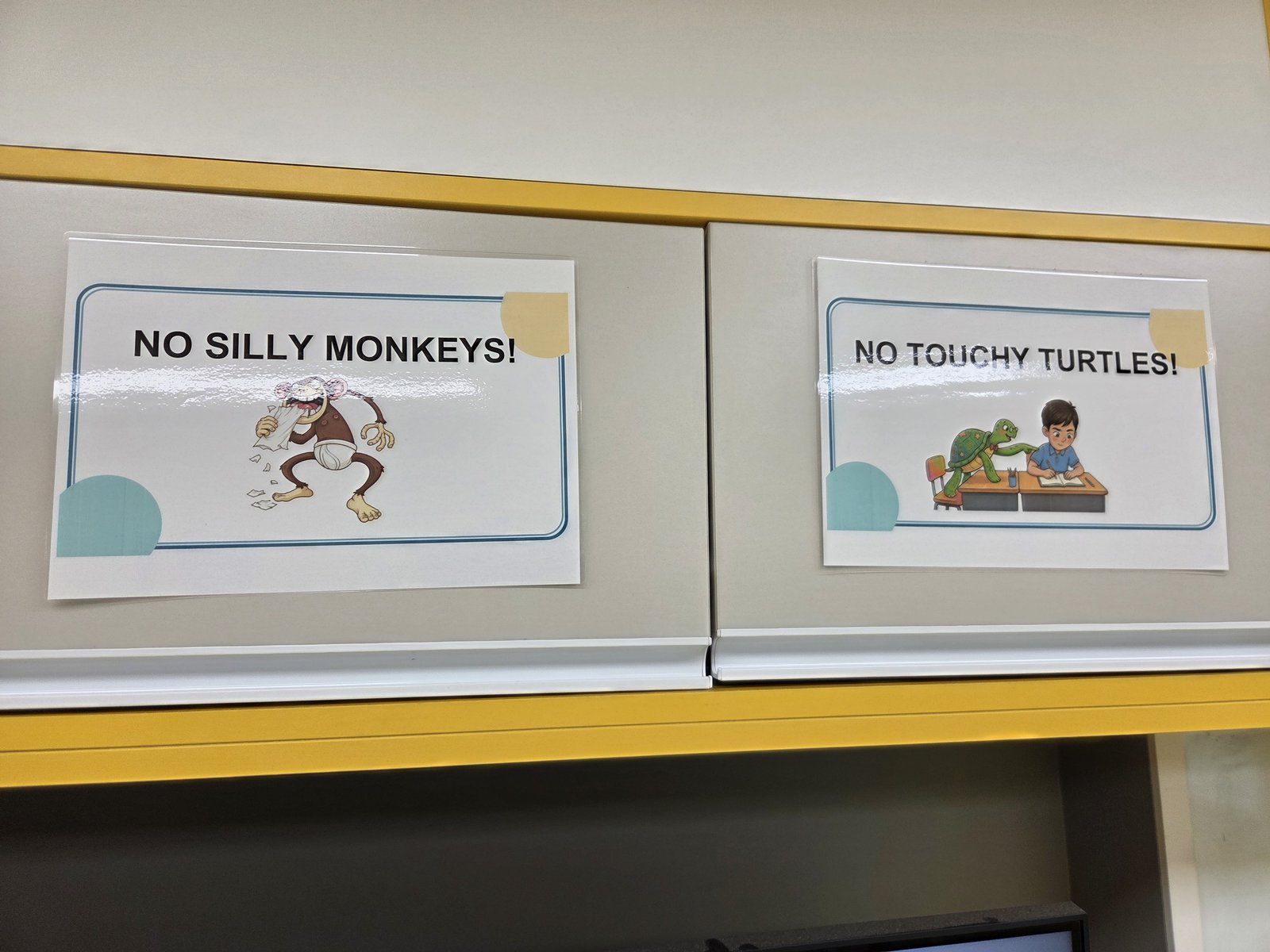
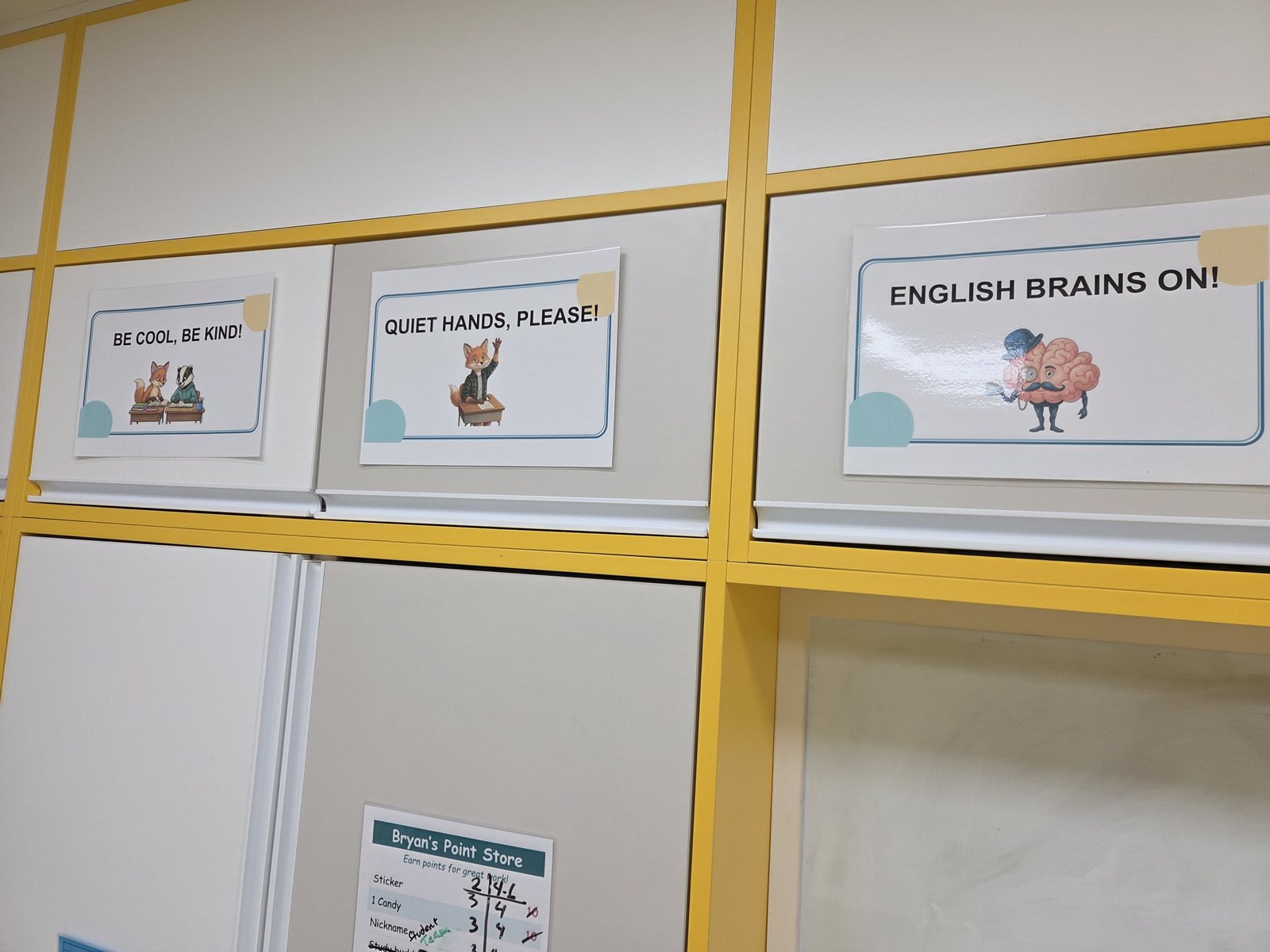
- Cooperative learning enthusiast who uses Kagan Cooperative Learning structures and a team-based positive reinforcement system, where teams earn and spend points together, to support collaboration and classroom culture
- Develops custom tools for lesson planning, classroom management, and formative assessment, including Ribbon, the adaptive lesson planner, and Growth Spiral (in progress)
Co-Founder and Head Teacher, Banhana English, Busan
2016 to present
- Co-founded and co-leads an English literacy and test-prep academy delivering small-group instruction to EFL learners ages 9 to 14
- Delivered TOEIC Bridge, TOEFL Primary, and TOEFL Junior test preparation; the academy was an authorized test center and proctored these exams on-site
- Designed and directed a modular literature curriculum for private tutoring, using an AI-assisted workflow to build and refine materials covering thematic analysis, character tracking, and tiered comprehension
- Completed Washington DC K-6 teaching licensure practicum on-site
Assistant Professor, English Literacy and Communication, Dong-A University, Busan
2016 to March 2026
- Delivered EFL coursework and TOEIC test preparation instruction over a nine-and-a-half-year appointment
Instructor, COLAL Department
2015 to 2016
INTI International University, Nilai, Malaysia
Delivered university-level EFL instruction in 8-week terms.
Guest Professor, Foreign Language Department
2010 to 2015
Pukyong National University, Busan
Delivered university-level EFL instruction across 15-week semesters and summer camps; received the Outstanding Teacher Award in 2013 and 2014.
EFL Educator
2008 to 2010
Maple College and KJC Academy, Busan
Delivered basic English instruction to elementary-age EFL learners at two Busan hagwons early in his teaching career.
Selected Projects
bryanmims.com — A personal portfolio site with my teaching philosophy, classroom systems, a Grade 4 math unit, and playable classroom tools.
Growth Spiral — A formative feedback system that turns photographed student work into instructional data: skills are automatically assessed and logged in a database tracking individual progression over time, informing targeted review, micro-lessons, extension activities, and flexible grouping. Currently under construction.
Ribbon — A standalone classroom management application developed for daily classroom use. Displays and logs daily and monthly team points, attendance, and behavioral data, and includes a timer and other functions used throughout live instruction.
Vocabulary Assessment System — An 800-word vocabulary curriculum across five grades and four proficiency tiers using a six-factor word-selection model weighing corpus frequency, CEFR level, age of acquisition, morphological generativity, concreteness, and curriculum fit. Paired with an AI-assisted process that generates print-ready tests and answer keys directly from the word lists.
Full-Novel Interactive Unit — An EAL-focused, multi-part interactive lesson series built around a complete novel, covering theme analysis, character development, comprehension, vocabulary development, and more, chapter by chapter across the full book.
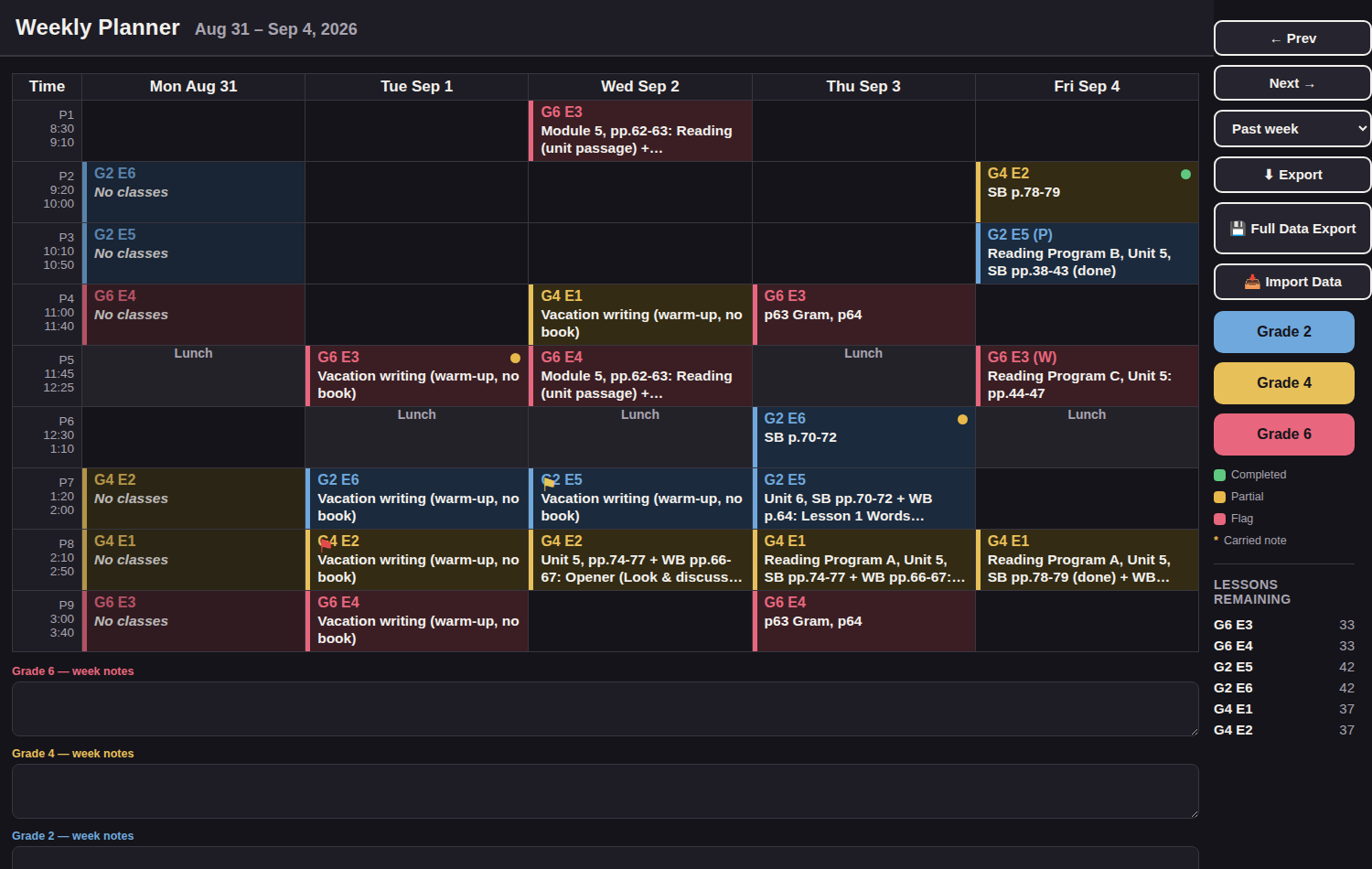
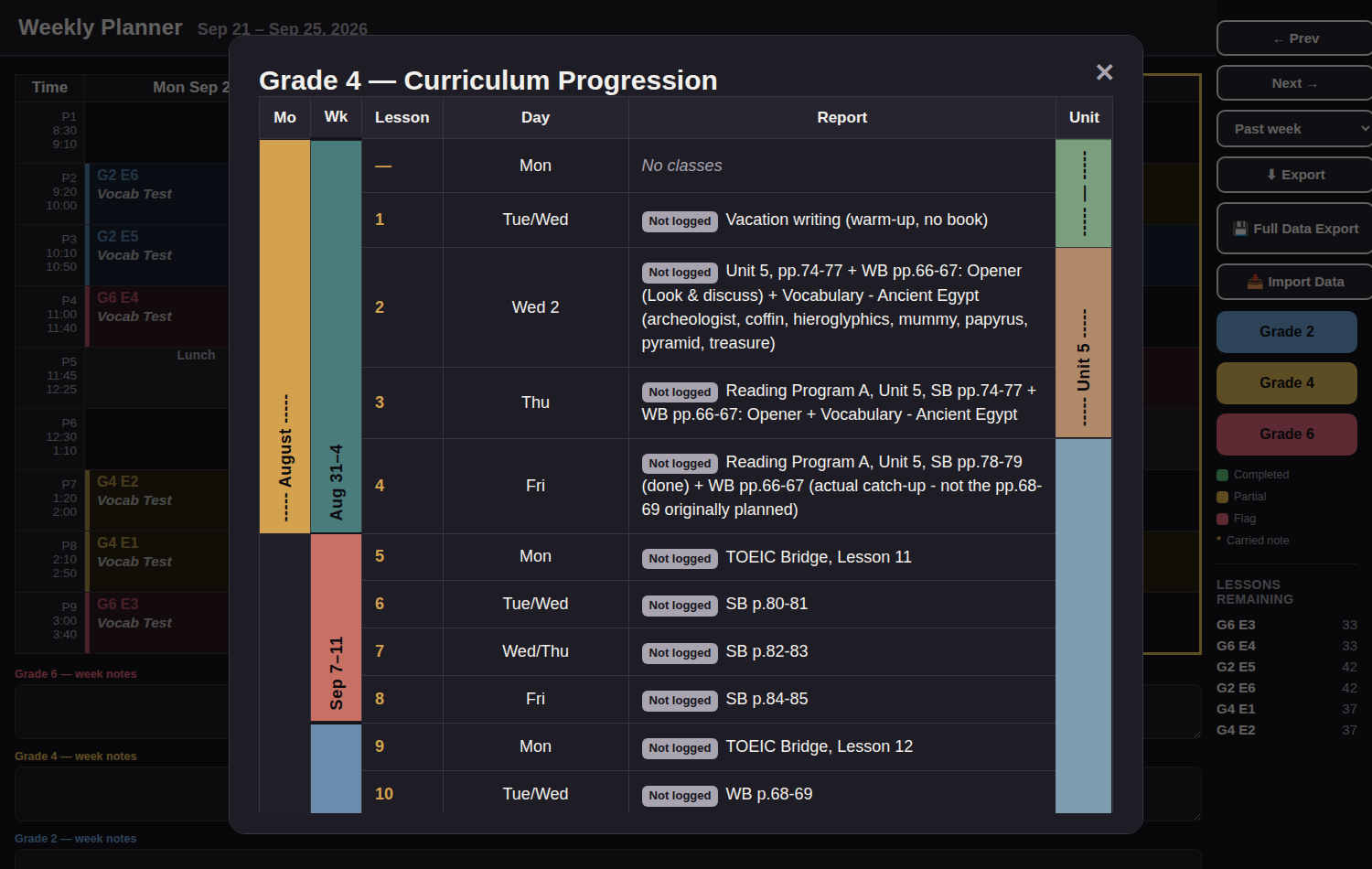
Adaptive Weekly Lesson Planner — Tracks grade-level lesson progression against the school schedule. When a lesson is skipped, cut short, or interrupted, the tool recalculates the class's position in the curriculum automatically, and a built-in AI advisor recommends whether unfinished content should carry into the next session, fold into a later review, or be dropped, weighing retrieval-practice and pacing tradeoffs. Tracks holidays and recurring events, and surfaces how many free days remain for games, review, or extra instruction. Currently configured for Dongsung's own schedule; the underlying template could be adapted to another teacher's schedule with modification.
Additional Experience
Lead Counselor, Talisman Summer Programs, North Carolina (Summers 2000, 2002, 2005) — a summer camp for children and adolescents with ADHD, autism, and other cognitive and behavioral challenges.
Education and Licensure
- Elementary Education Teacher License (K-6), Washington DC (OSSE), 2025
- M.Ed. in TESOL, Framingham State University, 2013
- TESOL Certificate (160 hours), University of Wisconsin-River Falls, 2010
- B.S. in Communications, Appalachian State University, 2006
- Pursuing Secondary Mathematics Endorsement (Praxis)
- Eagle Scout, Boy Scouts of America
Core Competencies
Science of Learning-Informed Instructional Design · Kagan Cooperative Learning · AI-Assisted Curriculum & Tool Development · Data-Informed Differentiation · EAL/ELA Curriculum Design, Grades 2-6 · Formative Assessment System Design